

My gap year between Honours and PhD
(written in partnership with the MAVE lab)
—
After finishing my Honours in 2024, I was pretty sure I wanted to do a PhD. I loved my project, I loved doing research, and I was completely hooked on marine mammal ecology. But starting a PhD is a huge commitment, and being pretty sure is not enough, I wanted to be 100% sure about the topic and my career direction. Plus, I still needed to convert my Honours research into a publishable paper, and honestly, I also just needed a break.
Many people say taking time off after your Honours degree can make it harder to come back to academia, and that definitely crossed my mind, but I also knew I needed time to reset: I went straight from high school into my undergraduate degree (three years), and from there to Honours (one year) without stopping. I was used to a very structured lifestyle, so the idea of a year without a strict timetable was a little terrifying. It was the first time in my life that I didn’t have a plan or a deadline hanging over me, and that took some adjusting.
To give myself some direction I set two simple goals for my gap year:
1) Submit my manuscript
Turning my Honours thesis into a manuscript was much harder than I expected. Without the pressure of due dates, my progress went from the slow and steady turtle to chaotic rabbit. I would power through a week of edits and feel amazing, then take a nap that ended up lasting three weeks.

Looking back, I definitely lost momentum. I took a week off after handing in my thesis, which became two weeks, which became a month, and suddenly the whole idea of starting again felt impossible. Once you lose that consistency and momentum, it is hard to get back into it.
But I chipped away at it, slowly but consistently enough that it did not take two years, and now it is finally ready for submission. I’m very excited about sharing my research with the world, and so proud of what I have achieved.
My advice? If you are turning your thesis into a paper, do not stop for too long. Take the break you need but keep the momentum going. Future you will be grateful.
2) Get experience in marine biology
I did not want my year off to just be a break; I wanted to actually advance my career. So, my plan was to find some hands-on marine biology experience; my honours was mostly computer-based, I wanted to diversify my skills
The first three months were pretty rough.
Marine biology is a very competitive field. I was applying for everything: consulting, bush regeneration, government roles, water testing, but the rejections rolled in fast. I also looked at international marine internships, but most of them involved fees, which was financially not realistic for me.
Luckily, I was able to organise an internship in New Zealand assisting with marine mammal strandings and necropsies with my Honours co-supervisor Prof Karen Stockin at the Cetacean Ecology Research Group (CERG) at Massey University.
As you can imagine, it was incredible! Not many people get the chance to dissect large marine mammals, and even though it was confronting (not to mention smelly), it was such meaningful work.
The first necropsy I assisted with was on a juvenile beaked whale, and I actually had to step outside because I thought I was going to faint. But I went back in, pushed through it, and went on to participate in four more full necropsies with no issues. What felt overwhelming at first became a lesson in resilience, and a reminder that I can do hard things, even if I need a minute before stepping back in.

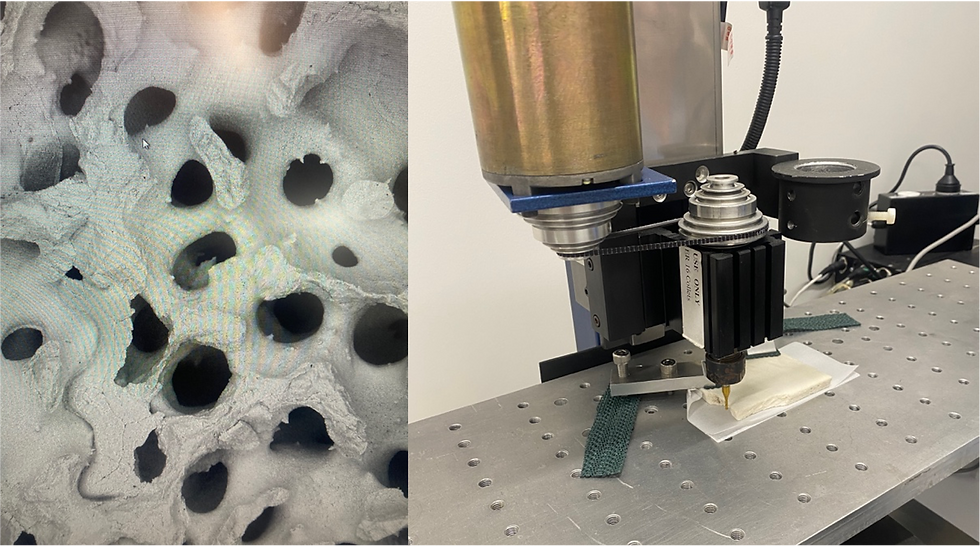
When I returned home, I started working in the Coral Lab at the University of Wollongong. This new job involved analysing fossil corals from Hawaii, screening X-ray and microscope images for diagenesis, prepping samples, and using an endmill to grind coral for paleoclimate reconstruction. Itis meticulous work, but I have genuinely loved learning techniques I never would have been exposed to otherwise.
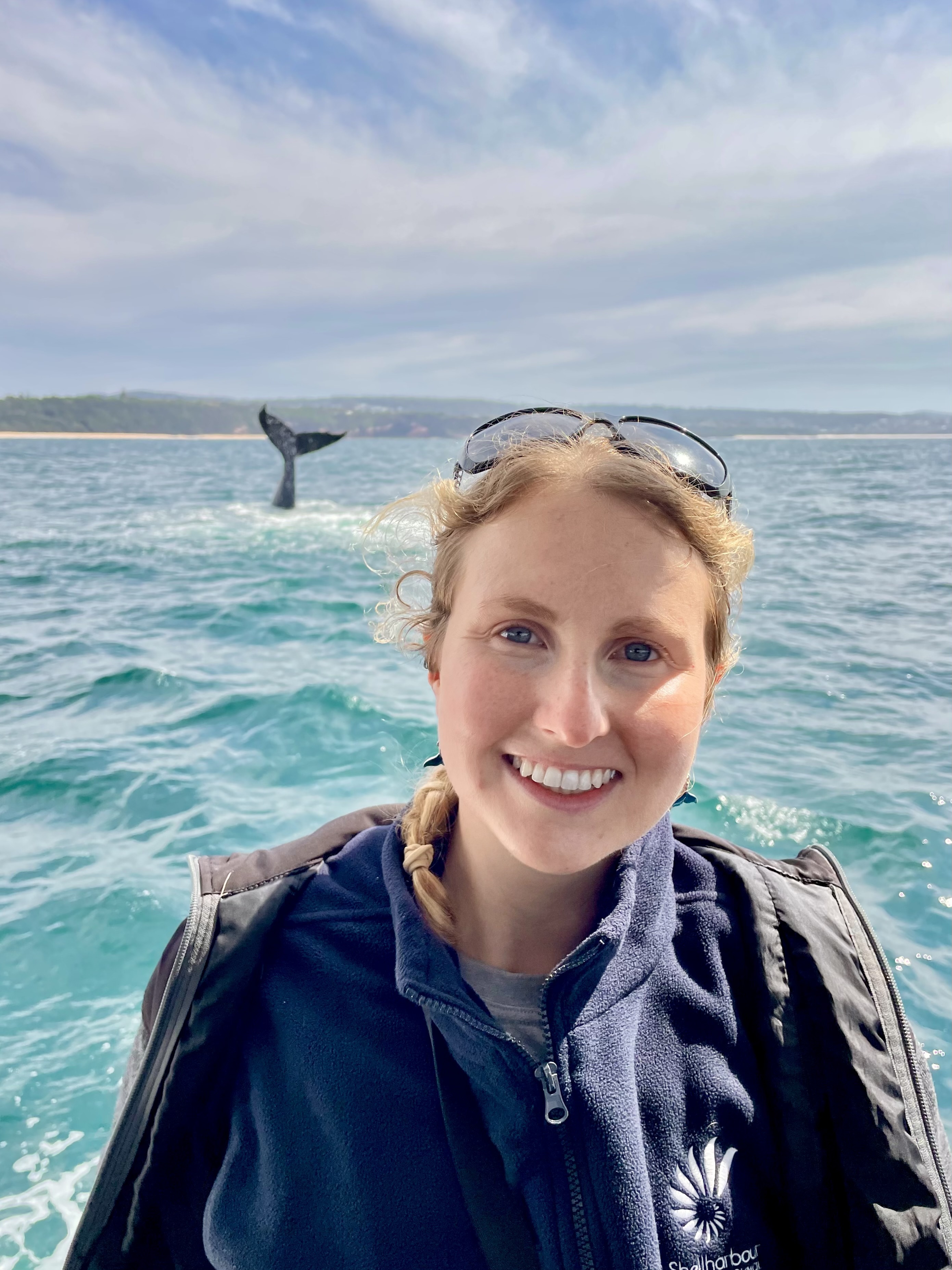
Towards the end of 2025, I became a volunteer for the Hearing in Humpbacks Acoustic Research Collaboration (HHARC) project with the Cetacean Ecology Group (CEG) at the University of Queensland for one month. This study looked at whether acoustic deterrent devices could help reduce shark-net entanglements for humpback whales.
My role was land-based tracking of small whale groups during their southbound migration, which mostly involved sitting on a hill watching whales through binoculars. I learned to use a theodolite (surprisingly fun) and used the software ‘Seascape’ to track movements and behaviour. I also had the opportunity to go out on the research boat, helping to spot and track whales and learning to deploy acoustic equipment, including deterrent devices, sound traps, and other recording instruments.
Watching whales for science is just as good as it sounds. Not only was this work extremely valuable for the practical field work experience, but also for the connections I made. I was in a team of 12 other volunteers from around the world, and hearing their stories about their education, careers, and experiences in marine biology encouraged me to continue and work towards my goals, while making some new friendships along the way.

In October I had the opportunity to attend the conference of the Society for Marine Mammalogy NZ/AUS student chapter in New Zealand. This was hosted at Massey University with CERG so it was great to see the team again and catch up on all the research they had been doing.
For more information on the conference read our blog ‘From Talks to Necropsies: What Happens at a Student Marine Mammalogy Conference’.
In no way could I have predicted that those were the things that I would get to do throughout the year! All that you can do is be proactive, to put yourself out there and take the opportunities when they come.
3) Looking back on the year
This gap year was not what I expected: it started stressful and uncertain, but it turned into one of the most valuable years I have had, both professionally and personally. I gained precious field and lab experience, learned new technical skills, worked with amazing teams, made new friends, grew my resilience, and finally finished writing my paper.

If you are thinking about taking time off between degrees, I 100% recommend it. Just make sure you have a plan, even if it is as simple as two clear goals. You learn so much, particularly about yourself, when you are not too busy worrying about your next exam.
Most importantly, I confirmed what I suspected at the beginning of the year: I do want to do a PhD...
...And now, I feel ready!
Elise Beaumont
--


Comments